Levers Auto
Buying a car is not only about engine power, fuel economy, or a polished dashboard. A safer choice begins with one practical question: What safety features are most important in cars?
This guide focuses on the equipment that can protect occupants before, during, and after a crash. Seat belts remain essential. Airbags add another layer of protection. Electronic stability control can help a vehicle stay on its intended path during a sudden turn. Automatic emergency braking, blind-spot monitoring, lane-keeping assistance, and adaptive headlights may also reduce everyday risks. Yet technology is not magic. A warning can arrive late, a sensor can become dirty, and a driver can misunderstand what the system can do.
David Harkey, president of the Insurance Institute for Highway Safety, has stressed the value of prevention: “The best way to prevent crash deaths is to prevent crashes from happening in the first place.” His point matters when comparing vehicles in a showroom. Look beyond the feature name. Check whether the system is standard, test its warning display, and learn how it behaves in rain or darkness. Open the rear doors. Examine belt positions and child-seat anchors. Notice whether the controls are clear when your hands are full.
Small details matter.
Official crash-test ratings from IIHS and NHTSA provide useful evidence, but they do not replace a careful inspection. I have found that buyers sometimes praise a vehicle’s safety package without reading its limits. That is an easy mistake. The strongest choice combines proven crash protection, effective driver assistance, clear instructions, and responsible driving habits.
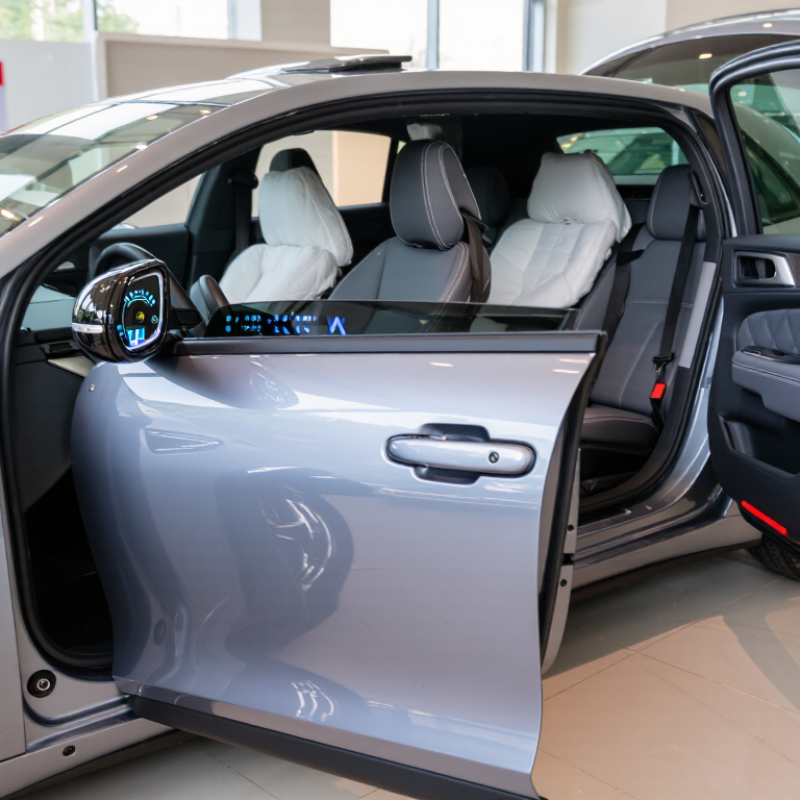
A strong crash structure manages energy before it reaches the passenger cabin. Crumple zones collapse in controlled stages, while the safety cell should remain relatively stable. Look for clean door gaps, solid roof pillars, and no visible cabin distortion after a previous crash. A vehicle that appears repaired may still hide weakened metal. That matters.
The Insurance Institute for Highway Safety’s 2024 crash-test ratings examine intrusion, restraint performance, and dummy injury measurements. Its small-overlap test places severe stress near the vehicle’s front corner. This area can bypass older structural designs. The National Highway Traffic Safety Administration also reports that frontal airbags saved more than 50,000 lives from 1987 through 2017. Airbags help, but they cannot replace a strong passenger compartment.
During a viewing, inspect the trunk floor, spare-wheel well, weld lines, and dashboard alignment. Uneven seams may indicate poor structural repairs. Ask for the vehicle’s complete accident history and independent inspection records. A test score is useful, not absolute. Laboratory barriers cannot reproduce every impact angle, road surface, or loading condition. I sometimes find buyers focusing on screens and fuel economy first. That choice deserves reconsideration. The metal around occupants may matter more than the equipment they notice daily.
The chart compares common frontal crash-test overlap areas as a percentage of the vehicle’s front width. Small-overlap impacts engage less of the front structure and can place greater demands on the vehicle’s side rails, wheel area, and occupant safety cage. A larger overlap generally engages more crumple-zone structure to manage crash energy before it reaches the passenger compartment.
Reference dimensions: 25% small-overlap testing, 40% moderate-overlap testing, and 100% full-width frontal testing.
A seat belt is the first restraint most occupants use, not an emergency accessory. During a crash, a pretensioner pulls slack from the belt within milliseconds. This action helps keep the chest and hips positioned near the seat. It also reduces forward movement before the body loads the belt fully. Some systems include load limiters, which release controlled belt force during severe impacts. Small details matter.
When inspecting a vehicle, pull the belt slowly and let it retract several times. The webbing should feel smooth, without cuts, fraying, stains, or twisted sections. Insert the latch until it clicks, then tug firmly. The buckle must release cleanly with one press. Sit normally and check whether the shoulder belt crosses your chest, not your neck. A belt that locks during a sharp pull is behaving as intended.
Look for restraint-system warning lights after starting the vehicle. The light should appear briefly, then turn off. If it remains illuminated, ask for a qualified diagnostic inspection. A pretensioner may have deployed in an earlier collision, even when exterior damage looks minor. Replacement parts and installation quality deserve documented proof. I once paid more attention to airbag labels than belt condition; that was a poor inspection habit. Buyers can miss worn webbing beneath a child seat or seat cover. Comfort is useful, but proper belt contact matters more.
Airbags are not decorative extras; they are carefully timed restraints. Frontal airbags cushion the head and chest during a severe forward crash. Side airbags help protect the ribs, pelvis, and head when another vehicle strikes the doors. Curtain airbags drop from the roofline, covering the side windows like a protective screen.
The numbers are persuasive. NHTSA’s Traffic Safety Facts reports that frontal airbags saved 50,457 lives from 1987 through 2017. IIHS research also found that head-protecting side airbags reduced driver death risk by about 37% in side-impact crashes. These figures describe population-level results, not guaranteed outcomes. Real protection depends on seat-belt use, seating position, crash direction, and airbag deployment timing.
Rollover protection deserves closer inspection. Ask whether the vehicle has roof-mounted curtain airbags and rollover-sensing deployment. NHTSA reports that rollover crashes account for roughly one-third of passenger-vehicle occupant deaths in some recent fatal-crash data. Check the owner’s manual, airbag warning light, and safety equipment label before buying. A larger airbag count can sound reassuring, but counting bags alone is a weak shortcut. Some rear-seat occupants may receive less coverage than front occupants. That detail is easy to miss. Crash-test ratings and restraint-system descriptions provide stronger evidence than sales language. Airbags reduce injury risk, yet they cannot replace a properly fastened belt or correct seating position.
7 Essential Car Safety Features Every Buyer Should Check
Anti-lock braking systems and electronic stability control deserve close attention during any vehicle inspection. ABS prevents wheels from locking during hard braking, helping the driver maintain steering control. You may feel rapid pedal pulses when it activates. That sensation is normal. A warning light is not.
Electronic stability control detects unwanted skids through wheel-speed, steering-angle, and yaw sensors. It can reduce engine power or apply individual brakes when the vehicle begins drifting. On a wet bend, this intervention may feel abrupt, but it can help restore the intended path. It cannot defeat unsafe speed or worn tires.
Check both systems before purchase. Turn the ignition on and confirm their warning lights appear briefly, then disappear after the engine starts. If a light remains, request a professional diagnostic scan. Do not accept a seller’s guess. During a controlled road test, brake firmly on a safe, dry surface and notice whether the car stays predictable. Avoid testing emergency functions in traffic.
Inspect the tires too. Uneven tread, incorrect pressure, or mismatched tires can weaken ABS and stability control performance. I once focused too heavily on dashboard features and nearly overlooked a worn rear tire. That mistake changed my inspection routine. Electronic safeguards need sound brakes, proper tires, and attentive driving to work as designed.
Automatic emergency braking deserves close attention during a vehicle inspection. It uses cameras, radar, or both to detect possible collisions. In a test drive, watch for warnings near a parked object, but never provoke an emergency stop. Ask whether the system detects pedestrians, cyclists, and vehicles at night. Its performance can change with rain, snow, glare, or a dirty sensor. That matters.
Lane-keeping assistance can gently steer when the vehicle drifts over visible markings. It should support an attentive driver, not replace one. Try it on a clearly marked road and notice whether the correction feels smooth or abrupt. Some systems struggle with faded lines, construction zones, and tight curves. I would also check the owner’s manual for adjustment options, because excessive steering intervention may become distracting. My first impression can be wrong.
Blind-spot alerts are especially useful beside large vehicles or during busy lane changes. Look for a warning in the side mirror and an audible or steering alert when another vehicle approaches. Test the feature from a safe position, never by cutting across traffic. Ask whether it covers adjacent lanes and whether alerts remain active with a trailer attached. These systems have blind areas too. Keep checking mirrors and turn your head before moving. A confident dashboard warning is not proof that the path is clear.
| Safety Feature | What It Does | Typical Detection Area | Driver Alerts or Assistance | Important Limitations to Check |
|---|---|---|---|---|
| Automatic Emergency Braking (AEB) | Warns of an imminent forward collision and may apply the brakes if the driver does not react quickly enough. | Forward roadway; performance may include vehicle, pedestrian, cyclist, or crossing-object detection depending on the system. | Visual and audible warning, followed by automatic braking in qualifying situations. | Effectiveness can be reduced by darkness, rain, snow, glare, dirty sensors, curves, high speeds, or objects the system cannot classify. |
| Lane Keeping Assist | Helps keep the vehicle from unintentionally drifting out of a detected lane. | Road lane markings visible to a forward-facing camera or related sensor. | Lane-departure warning and, on some systems, gentle steering input toward the lane center. | May struggle with faded markings, construction zones, sharp bends, snow-covered roads, or roads without clear lane lines. |
| Blind-Spot Monitoring | Detects vehicles traveling in areas that may be difficult to see in the side mirrors. | Adjacent lanes and areas beside or slightly behind the vehicle. | A visual indicator, often near the side mirror, and sometimes an audible or steering warning when a turn signal is used. | Detection range varies; motorcycles, bicycles, fast-closing vehicles, trailers, roadside barriers, and poor weather may affect performance. |
| Rear Cross-Traffic Alert | Warns about approaching traffic when reversing out of a parking space or driveway. | Areas crossing behind the vehicle, generally outside the driver’s direct rear view. | Audible, visual, or haptic warning; some advanced systems may provide braking assistance. | May not detect objects moving very slowly, objects directly behind the vehicle, pedestrians in all conditions, or traffic blocked by nearby vehicles. |
| Electronic Stability Control (ESC) | Helps reduce loss of control by selectively braking individual wheels and adjusting engine power when the vehicle begins to skid. | Vehicle movement, steering input, wheel speed, and differences between the intended and actual direction of travel. | Usually operates automatically; a dashboard indicator may flash when the system intervenes. | Cannot overcome excessive speed, unsuitable tires, icy roads, or the laws of vehicle handling; it should not encourage aggressive driving. |
| Adaptive Cruise Control | Maintains a selected speed and adjusts acceleration or braking to help maintain a following distance from traffic ahead. | Forward traffic within the system’s sensor range. | Automatic speed adjustment, with driver alerts when the system reaches its operating limits or requires intervention. | It may not respond reliably to stopped vehicles, cut-ins, sharp curves, poor weather, or road obstacles; it is not a substitute for attentive driving. |
| Airbags and Seat-Belt Pretensioners | Seat belts restrain occupants, while airbags provide supplemental protection during certain crashes. | Front, side, curtain, knee, or other locations depending on the vehicle configuration. | Seat-belt reminders and automatic pretensioning may help secure occupants during a collision. | Airbags are supplemental restraints, not replacements for seat belts; seating position, occupant size, crash direction, and system condition affect protection. |
Buyer checklist: Confirm the feature is standard or available on the exact vehicle and trim, test the warning displays during a demonstration, review the owner’s manual, and check for current safety recalls before purchase.
A strong structure manages crash energy before it reaches the passenger cabin. Crumple zones collapse in controlled stages. The safety cell should remain relatively stable.
Check door gaps, roof pillars, trunk floors, and spare-wheel wells. Look for uneven seams, distorted metal, or misaligned dashboards. A clean exterior can mislead.
No. Ratings measure selected impacts, restraint performance, and dummy injuries. They cannot reproduce every road, loading condition, or collision angle. Useful, but incomplete.
It stresses the vehicle’s front corner heavily. Older structural designs may allow severe cabin intrusion there. This test exposes weaknesses that broader impacts might miss.
They cushion the head and chest during severe forward crashes. Their timing matters greatly. Airbags cannot replace a properly fastened seat belt.
Side airbags help protect the ribs, pelvis, and head. Curtain airbags cover side windows like a protective screen. Coverage may differ between seating positions.
Yes. Check for roof-mounted curtain airbags and rollover-sensing deployment. Rollover crashes can cause many occupant deaths. Airbag numbers alone are not enough.
Request the complete accident history and independent inspection records. Check the airbag warning light and safety equipment label. Small details matter.
No. Protection depends on belt use, seating position, crash direction, and deployment timing. A larger airbag count may sound reassuring. That shortcut can fail.
The metal surrounding occupants may matter more than screens or fuel economy. I sometimes focus on convenient features first. That deserves reconsideration.
When choosing a vehicle, understanding “What safety features are most important in cars” can help buyers make a confident decision. A strong crash structure with carefully designed crumple zones helps absorb impact energy and protect the passenger compartment. Seat belts, especially those equipped with pretensioners, keep occupants securely positioned during a collision. Front, side, and rollover airbags provide additional protection by reducing contact with hard surfaces and limiting injury risk from different impact directions.
Active safety systems are equally valuable in preventing crashes. Anti-lock braking helps maintain steering control during emergency stops, while electronic stability control can reduce skidding and improve handling on slippery roads. Automatic emergency braking may warn the driver and apply the brakes when a collision appears likely. Lane-keeping assistance can help prevent unintended drifting, and blind-spot alerts can make lane changes safer by identifying vehicles that may be difficult to see. Together, these features offer layered protection before, during, and after an accident.
