Levers  Auto Levers Auto

How to Handle a Car Emergency Safely

Time:2026-11-26 Author:Charlotte
0%

A car emergency can turn an ordinary drive into a confusing, frightening moment. A flat tire on a narrow shoulder, a collision at an intersection, or smoke rising from beneath the hood can leave anyone unsure what to do. What should I do in a car emergency? Start by protecting people from immediate danger, then seek help. Keep your movements deliberate. If the vehicle still moves and it is safe, steer away from traffic and stop in a secure place. Switch on hazard lights when appropriate, and avoid standing where passing vehicles could strike you.

Some situations need emergency services right away, especially when someone is injured, trapped, or exposed to fire or another immediate threat. Give responders your location and a clear description of what happened. Do not approach flames, leaking fuel, or damaged electrical equipment. If someone is hurt, offer only assistance you can provide safely and within your training. A simple first-aid kit and charged phone can help, but neither replaces professional care. Small details matter. So does staying calm.

This guide explains practical steps for common breakdowns and crashes, including how to make the scene safer, communicate clearly, and prepare before your next trip. No checklist can predict every emergency, and real events can unsettle even experienced drivers. I would not assume I’ll remember every step under pressure. A little preparation, though, can make the next decision clearer and help protect you, your passengers, and others nearby.
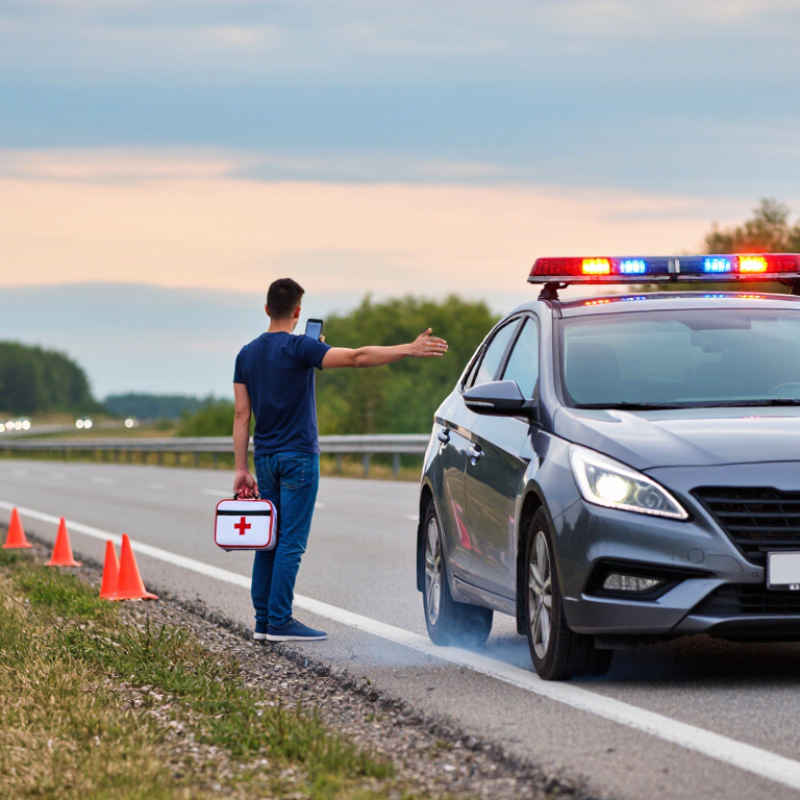
How to Handle a Car Emergency Safely

Recognize the Emergency and Stay Calm

A car emergency often announces itself through small, specific changes: a temperature gauge climbing, a burning smell, smoke, a sudden loss of power, or steering that feels unusually heavy. Notice what changed, but do not diagnose it while driving. Focus on controlling the vehicle and finding a safe place to stop. Ease off the accelerator, signal, and move away from moving traffic when possible. Pause. Breathe once. Panic can narrow attention; a brief, deliberate breath helps you check the road, passengers, and warning lights in order. If the car is in immediate danger, contact emergency services.

The National Highway Traffic Safety Administration reported 40,901 U.S. motor-vehicle crash deaths in 2023. That figure concerns crashes, not roadside breakdowns, but it is a sobering reminder that the location of a stop matters. Once parked, switch on hazard lights and assess the surroundings before opening a door. On a busy road, stay belted if the vehicle offers safer protection than stepping into traffic; leave only when you can move away from danger safely. Keep children away from the roadway. A warning light may look familiar, yet smoke or a strong fuel smell changes the situation. I might be tempted to inspect the engine immediately; that instinct deserves a second thought. Give yourself time to choose the safer next move.

Move the Vehicle and Occupants to a Safer Location

When a car problem begins, keep your attention on steering and traffic. Turn on hazard lights, ease off the accelerator, and guide the vehicle toward a wide shoulder, parking area, or nearby exit if it remains controllable. Avoid stopping just beyond a bend or over a hill, where approaching drivers may not see you. A few extra seconds of movement can matter.

Once stopped, check the surroundings before opening a door. If traffic is close, exit on the side away from moving vehicles and help passengers do the same. Move behind a sturdy barrier, such as a guardrail, or well away from the roadway. Stay visible. Do not stand between vehicles or behind your car; a following driver may not stop in time. If smoke, flames, or a strong fuel smell appears, leave promptly and move farther away.

Sometimes getting out is more dangerous than staying inside. If the car is stranded in an active lane and no safe exit is available, keep seat belts fastened, turn on hazards, and contact emergency services. Tell them your location and which direction you are facing. It is easy to fixate on the damaged tire or engine; I would, too. But people come before the vehicle. Remain in a protected place until help arrives.

How to Handle a Car Emergency Safely - Move the Vehicle and Occupants to a Safer Location

Situation Vehicle action Where occupants should go Key safety precautions
Vehicle is still moving and can be controlled Signal, slow gradually, and steer toward a wide shoulder, parking area, or other place away from moving traffic. Stop as far from traffic as conditions allow. Stay seated with seat belts fastened until the vehicle is stopped and it is safe to decide whether to exit. Avoid sudden braking or sharp steering unless needed to avoid an immediate hazard. Do not stop in a travel lane if a safer reachable location is available.
Vehicle is stopped on a highway shoulder Switch on hazard lights. If the vehicle can be moved safely and the problem is not urgent, proceed to a nearby safe stopping place rather than remaining close to fast traffic. If there is a safe exit away from traffic, leave from the side farthest from moving vehicles and move well away from the roadway, preferably behind a sturdy barrier. If exiting would expose occupants to traffic, remain buckled inside and call for help. Never stand in front of or behind the vehicle, and do not attempt repairs beside fast-moving traffic.
Vehicle is disabled in a traffic lane or another immediately dangerous spot Turn on hazard lights. Move the vehicle only if it can be done without worsening the danger; otherwise, keep it stopped and contact emergency services. Choose the safest option based on surrounding traffic and available exits: move away from the roadway if a safe route exists, or stay belted inside if getting out would be more dangerous. Do not push the vehicle in active traffic. Tell the dispatcher the vehicle’s location, direction of travel, and whether anyone is injured or in immediate danger.
Smoke, fire, fuel smell, or another sign of immediate danger Stop as soon as safely possible, switch off the engine, and leave the vehicle promptly if an exit route is safe. Move everyone away from the vehicle and traffic to a safe location. Call emergency services and do not return to the vehicle. Do not open the hood if there is a fire or heavy smoke. Keep clear of flames, smoke, and leaking fluids.
Vehicle is stopped on a quiet street or in a parking area Park fully out of the path of traffic, apply the parking brake, and switch on hazard lights if the vehicle could obstruct or surprise other road users. Remain in a safe place away from traffic while arranging assistance. Keep children and other passengers together and supervised. Use a phone from a safe location. Do not stand in the roadway or leave passengers unattended near traffic.
After reaching a safer location Keep hazard lights on when appropriate and provide the vehicle’s precise location when requesting roadside or emergency assistance. Stay together in a protected area, away from moving traffic, until help arrives. Call emergency services for injuries, fire, a dangerous roadway obstruction, or another immediate threat. Follow dispatcher instructions.

Make the Vehicle Visible to Other Road Users

How to Handle a Car Emergency Safely: Make the Vehicle Visible to Other Road Users

A stalled car can become difficult to see in rain, dusk, or fast-moving traffic. Turn on your hazard lights as soon as you can, then steer toward a wide shoulder or other safe area. NHTSA recorded 7,522 pedestrian deaths in 2022. That figure includes all pedestrian crashes, not only roadside breakdowns, but it underscores how exposed people can be near traffic.

Once stopped, keep your wheels angled away from the road if practical. If you can leave safely, move passengers behind a barrier or well away from traffic. Wear reflective clothing and use a flashlight after dark. Place warning devices only when you can do so without stepping into traffic; a warning triangle is not worth risking a second emergency. If exiting feels unsafe, stay belted inside and contact roadside assistance. Visibility is easy to underestimate. A hazard light may be on, yet a vehicle can still blend into rain or glare.

Tips: Keep a reflective vest and flashlight within reach, not buried under luggage. Check their condition occasionally. Small details matter.

Check for Injuries and Contact Emergency Services

After a collision, pause and check yourself before approaching anyone else. Look for bleeding, confusion, trouble breathing, or complaints of neck or back pain. Ask each person simple questions, but do not pull an injured person from the vehicle unless fire, traffic, or another immediate danger threatens them. A calm voice helps. It is tempting to assume someone is fine because they can talk; shock can make injuries harder to recognize.

Call the local emergency number and give the dispatcher your exact location, the number of people involved, and any visible injuries or hazards. Follow their instructions, and keep the line open if asked. NHTSA’s 2023 traffic fatality report recorded 40,901 deaths on U.S. roads, a sobering reminder that crash scenes deserve careful attention. If it is safe, switch on hazard lights and wait away from moving traffic. Don’t stand in a lane to direct cars. Even a small detail, like a fuel smell or blocked road, may change what responders need to know.

Tips: Tell the dispatcher the nearest road marker, intersection, or landmark. Use a flashlight at night, but never point it toward approaching drivers. Keep injured people warm and still, and avoid giving them food or drink. If you are unsure what to do, say so plainly and follow the dispatcher’s guidance.

Wait Safely for Help and Follow Further Instructions

When a breakdown or crash leaves you waiting, choose the safest place available, not the most convenient one. If the car can move without creating more danger, pull well clear of traffic, switch on the hazard lights, and stop on firm, level ground. On a busy road, never stand between your vehicle and moving traffic. If getting out would put you in danger, stay inside with your seat belt fastened and doors locked. That can feel counterintuitive. I still catch myself wanting to step out and inspect a strange sound; resist that urge near fast traffic.

Call emergency services if anyone is injured, there is fire or smoke, or danger is immediate. Otherwise, contact roadside assistance. Give your location using road signs, mile markers, or a map pin. Describe your vehicle, direction of travel, and any hazards nearby. Keep your phone available, and stay where responders can find you without standing in traffic. Follow the operator’s directions, and call back if conditions change. If responders ask you to move, do so only when the route is safe. Instructions may change as the scene changes. Ask them to repeat anything unclear; stress can make simple details slippery.

FAQS

What should I do when my car starts having trouble?

Keep steering and traffic in mind. Turn on hazard lights, ease off the accelerator, and move toward a wide shoulder or safe parking area if possible. Avoid bends and hilltops.

Where should passengers wait after we stop?

Check traffic before opening doors. If it is safe to exit, use the side away from moving vehicles. Move behind a guardrail or well away from the road. Stay visible.

Is it always safer to get out of the car?

No. If the car is stranded in an active lane and there is no safe exit, stay belted inside, switch on hazards, and call emergency services. Tell them your location and direction of travel. It can feel wrong to wait, but stepping into traffic may be worse.

What if I notice smoke or a strong fuel smell?

Leave promptly if you can do so safely. Move farther from the vehicle and roadway. Don’t stop to inspect the engine.

How can I make a stopped car easier to see?

Use hazard lights. Wear reflective clothing and use a flashlight after dark. A car can still blend into rain or glare.

Should I place a warning triangle behind the car?

Only if you can place it without entering traffic. A triangle is not worth risking another emergency. Keep a reflective vest and flashlight within reach.

What should I do after a collision?

Check yourself and others for bleeding, confusion, breathing trouble, or neck and back pain. Call the local emergency number and share your exact location, the number of people involved, and visible hazards. Keep injured people warm and still.

Should I move someone who may be injured?

Usually, don’t pull them from the vehicle unless fire, traffic, or another immediate danger threatens them. Follow the dispatcher’s instructions. Talking does not always mean someone is unhurt.

What details should I give the dispatcher?

Share a nearby intersection, road marker, or landmark. Mention fuel smells, blocked roads, and visible injuries. If you are unsure what to do, say so plainly.

Conclusion

What should I do in a car emergency? First, recognize that something is wrong and take a moment to stay calm so you can make clear decisions. If it is safe to do so, move the vehicle away from moving traffic and guide passengers to a safer place, such as well away from the roadway. Avoid standing where other vehicles may approach.

Make the vehicle easier for other road users to see by using its warning lights and any suitable warning equipment available. Check yourself and others for injuries, and contact emergency services if anyone needs urgent medical help or the situation is dangerous. Then wait in a safe location, keep clear of traffic, and follow instructions from emergency responders or roadside assistance. Staying alert and communicating clearly can help protect everyone until help arrives.

Charlotte

Charlotte

Charlotte is a seasoned marketing professional with a deep understanding of the company's portfolio and a passion for elevating its presence in the market. With a keen eye for detail and a commitment to excellence, she ensures that our professional blog is regularly updated with insightful articles......