Levers  Auto Levers Auto

Why Is Driving Safety Important for Everyone Worldwide?

Time:2026-10-22 Author:Oliver
0%

Why is driving safety important for everyone? The answer begins with a simple reality: every journey involves shared roads, shared risks, and shared responsibility. A driver may leave home during heavy rain, pass a crowded school entrance, or approach a motorcycle hidden beside a truck. Small decisions can change those moments quickly. Slowing down, checking mirrors, wearing a seat belt, and avoiding distractions protect more than the person behind the wheel.

The World Health Organization identifies road traffic injuries as a major global public health concern. Dr. Etienne Krug, Director of the WHO Department of Social Determinants of Health, has emphasized, “Road safety is a shared responsibility.” This principle includes drivers, passengers, cyclists, pedestrians, vehicle manufacturers, transport planners, and public authorities. Professional safety practice also depends on evidence, training, vehicle maintenance, and honest risk assessment. Experience teaches an uncomfortable lesson: confidence is not the same as competence.

Mistakes still happen.

A driver can miss a warning sign after a long workday. A pedestrian can misjudge a vehicle’s distance. A well-maintained car can still lose traction on standing water. Therefore, safe driving requires continuous attention, patience, and humility. This introduction explores why driving safety matters worldwide, how human behavior shapes road outcomes, and which practical habits reduce preventable harm. It will not promise perfect protection. Roads are complex, and safety advice must be applied thoughtfully in real conditions. Yet each careful choice creates more time, visibility, and space for everyone.
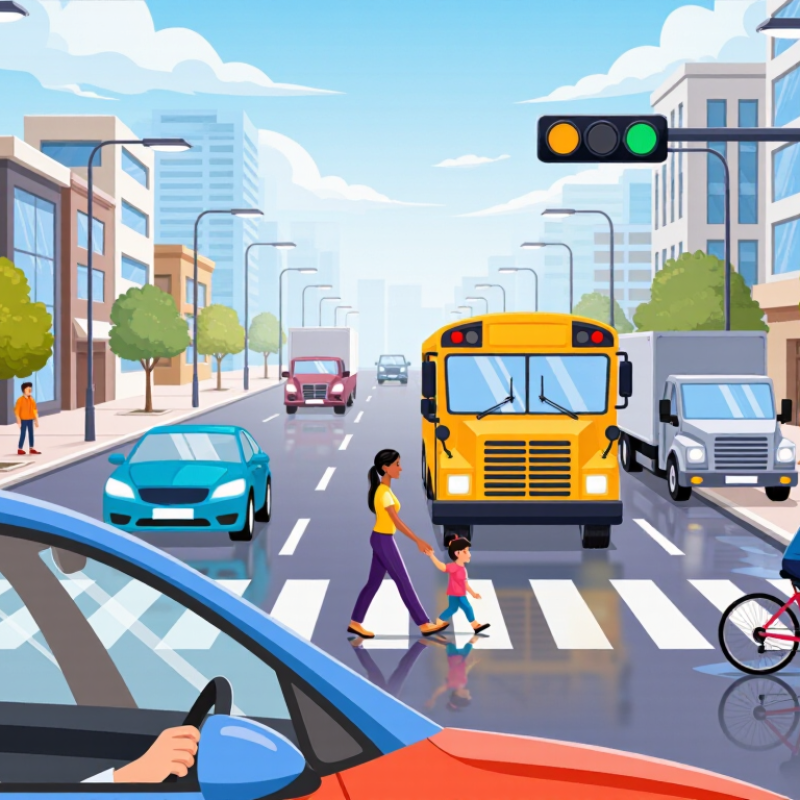
Why Is Driving Safety Important for Everyone Worldwide?

The Global Role of Driving Safety in Everyday Transportation

Why Is Driving Safety Important for Everyone Worldwide?

The Global Role of Driving Safety in Everyday Transportation

Driving safety influences ordinary journeys, from school drop-offs to evening deliveries. According to the World Health Organization’s Global Status Report on Road Safety 2023, road crashes kill about 1.19 million people annually. Another 20 to 50 million people suffer nonfatal injuries. These figures show that safety is not only a driver’s concern. It affects passengers, cyclists, pedestrians, families, and public services.

Small delays matter. A driver who slows near a crowded crossing may protect someone hidden behind a parked vehicle. On wet roads, gentle braking and greater following distance create valuable reaction time. In daily travel, safety also depends on vehicle maintenance, clear signs, road design, and realistic speed limits. The International Transport Forum’s road safety reporting repeatedly links safer systems with better enforcement, infrastructure, and post-crash care. Human attention remains important, but roads should not rely on perfect behavior.

Data remain imperfect. Many minor crashes never enter official records, especially where reporting systems are limited. That weakness can hide dangerous intersections and understate injury costs. The WHO also identifies road traffic injuries as the leading cause of death for people aged 5–29. This deserves more than annual campaigns. It calls for routine decisions: checking tire condition, avoiding phone use, watching blind spots, and leaving space for mistakes. I still find rushed journeys tempting, which exposes a difficult truth: knowing the safe choice does not always make it easy.

Major Risks and Causes of Road Traffic Accidents

Why Is Driving Safety Important for Everyone Worldwide?

Road crashes rarely come from one mistake alone. Speed, fatigue, distraction, poor visibility, and unsafe road design can combine within seconds. A driver checking a message may miss a cyclist at an intersection. A tired driver may react too late when a vehicle brakes suddenly. Rain can hide lane markings, while glare can make pedestrians difficult to see. These risks affect commuters, passengers, cyclists, and people walking near busy roads. No one is perfectly alert.

Traffic safety specialists often identify human error as a major contributing factor, but the wider environment also matters. Poor lighting, confusing signs, damaged surfaces, and limited crossing points can increase danger. Crash investigations show that small failures may align before an impact occurs. In daily driving, I have caught myself focusing too much on reaching a destination. That moment is uncomfortable. It shows how quickly attention can narrow. Vehicle maintenance matters too, especially for tires, brakes, lights, and mirrors.

Tips: Keep your phone out of reach. Slow down before intersections. Leave extra space in rain. Rest before long trips. Check tire pressure and lights regularly. Watch for motorcycles, bicycles, children, and older pedestrians. If visibility drops, reduce speed instead of guessing. Some advice sounds simple, yet simple habits are often the first ones forgotten.

Why Is Driving Safety Important for Everyone Worldwide? – Major Risks and Causes of Road Traffic Accidents

Data Dimension Verified Data or Measurement Why It Matters for Driving Safety Reference
Global road traffic deaths Approximately 1.19 million people die each year in road traffic crashes worldwide. Road injuries remain a major global public-health and transport-safety problem. World Health Organization, Global Status Report on Road Safety 2023
Non-fatal injuries An estimated 20–50 million people suffer non-fatal injuries in road traffic crashes each year. Many survivors experience disabilities, long-term treatment needs, lost income, or reduced quality of life. World Health Organization, Road Traffic Injuries Fact Sheet
Country-income distribution Low- and middle-income countries account for about 92% of global road traffic deaths, while having roughly 60% of the world’s motor vehicles. Differences in road design, enforcement, emergency care, vehicle safety, and traffic growth strongly influence crash outcomes. World Health Organization, Global Status Report on Road Safety 2023
Vulnerable road users Pedestrians, cyclists, and motorcyclists make up more than half of all road traffic deaths globally. These users have little physical protection and are highly exposed to vehicle impact forces. World Health Organization, Global Status Report on Road Safety 2023
Young people Road traffic injuries are the leading cause of death for children and young adults aged 5–29 years. Safe driving education, graduated licensing, protective equipment, and safer streets are especially important for younger road users. World Health Organization, Road Traffic Injuries Fact Sheet
Speed A 1% increase in mean vehicle speed is associated with approximately a 4% increase in fatal crash risk. Higher speed reduces reaction time, increases stopping distance, and increases the energy transferred during a collision. World Health Organization, Managing Speed 2017
Speed and pedestrians The risk of death for a pedestrian struck by a car rises sharply as impact speed increases; at about 50 km/h, the risk is approximately four times higher than at about 30 km/h. Lower speed limits in areas with pedestrians can substantially reduce fatal and serious injuries. World Health Organization, Managing Speed 2017
Impaired driving Alcohol and psychoactive substances impair reaction time, judgment, vision, coordination, and attention, increasing crash risk. Driving after drinking alcohol or taking impairing drugs is a preventable cause of crashes and severe injuries. World Health Organization, Road Traffic Injuries Fact Sheet
Mobile-phone distraction Drivers using mobile phones have approximately four times higher risk of being involved in a crash than drivers who do not use them. Hands-free devices do not eliminate cognitive distraction; texting and browsing are particularly hazardous. World Health Organization, Mobile Phone Use: A Growing Problem of Driver Distraction
Motorcycle helmets Correctly worn motorcycle helmets can reduce the risk of death by more than six times and reduce the risk of brain injury by up to 74%. Helmet quality, correct fit, and consistent use are essential protective measures for riders and passengers. World Health Organization, Helmets: A Road Safety Manual for Decision-Makers and Practitioners
Seat belts Wearing a seat belt can reduce the risk of death among front-seat occupants by about 45–50% and the risk of serious injury by about 20–45%. Seat belts prevent occupants from being ejected and reduce contact with the vehicle interior during a crash. World Health Organization, Global Status Report on Road Safety 2018
Child restraints Child restraints can reduce deaths among infants by about 70% and deaths among young children by about 54–80%. Children require age- and size-appropriate restraints because standard adult seat belts may not protect them adequately. World Health Organization, Road Traffic Injuries Fact Sheet
Road infrastructure Poorly designed roads, unsafe crossings, inadequate lighting, missing sidewalks, and insufficient separation between traffic modes increase crash exposure. Safe-system design reduces the likelihood of crashes and limits the severity of mistakes when they occur. World Health Organization, Global Status Report on Road Safety 2023
Post-crash response Delays in detecting crashes, providing first aid, and reaching emergency medical care can increase the severity of outcomes. Emergency communication, trained responders, trauma care, and rehabilitation are critical parts of road safety. World Health Organization, Global Status Report on Road Safety 2023

Note: Figures are global estimates and may vary by country, road-user category, reporting method, and publication year.

How Safe Driving Protects Drivers, Passengers, and Pedestrians

Why Is Driving Safety Important for Everyone Worldwide?

How Safe Driving Protects Drivers, Passengers, and Pedestrians

Safe driving protects more than the person holding the wheel. A driver who slows near a school crossing gives children extra time to react. Leaving a safe distance also helps prevent sudden braking from becoming a serious collision. Seat belts matter in every seat, even during a short trip. A loose bag can also become dangerous when a vehicle stops sharply.

Passengers depend on the driver’s attention and judgment. Clear mirrors, steady speed, and both hands ready can make the ride more predictable. Children need properly fitted restraints, while older passengers may need extra time to enter or exit. Phones, tiredness, and emotional stress can quietly weaken concentration. I still believe many people underestimate tired driving because it feels less dramatic than speeding.

Pedestrians face the greatest physical risk in a small mistake. Drivers should check blind spots before turning, especially beside bicycles or parked vehicles. At night, wet roads can hide a person wearing dark clothing. A patient driver waits instead of forcing another road user to hurry. There is no perfect driver. Even experienced people miss a signal or misjudge a gap, so a deliberate pause can matter. Safe habits protect real people: a parent holding a child’s hand, a passenger carrying groceries, or a worker crossing before sunrise.

Laws, Technology, and Infrastructure That Improve Road Safety

Why Is Driving Safety Important for Everyone Worldwide?

Road safety depends on enforceable laws, useful technology, and streets designed to forgive human mistakes. The World Health Organization reports about 1.19 million road deaths every year. Around 92% occur in low- and middle-income countries, despite these nations owning fewer vehicles. Speed limits matter because pedestrian survival drops sharply as impact speed rises. Seat-belt and helmet laws also protect people during ordinary journeys, not only emergencies.

Technology can support these rules. Speed cameras, automatic emergency braking, blind-spot alerts, and electronic stability control help prevent predictable errors. The WHO Global Status Report on Road Safety 2023 identifies safer vehicles and stronger enforcement as essential interventions.

However, technology is not magic. A warning light cannot help when a driver ignores every alert. Public agencies should publish crash locations, enforcement results, and injury trends. Transparent data builds trust and exposes weak policies.

Infrastructure often determines whether a mistake becomes a tragedy. Raised crossings, protected cycle lanes, median barriers, clear lighting, and slower junctions create visible safety margins. The International Transport Forum emphasizes a Safe System approach, where roads, vehicles, and users share responsibility. A wet crossing near a school still needs drainage and bright markings. Some planning remains reactive, fixing dangerous sites only after repeated crashes. That approach deserves honest criticism. Safer design should anticipate failure before families experience it.

Shared Responsibilities for Creating Safer Roads Worldwide

Road safety is a shared responsibility, not only a driver’s concern. The World Health Organization’s Global Status Report on Road Safety 2023 estimates that about 1.19 million people die in road crashes each year. Another 20–50 million suffer non-fatal injuries. Every statistic represents a person waiting at a crossing, cycling home, or riding in a crowded vehicle.

Responsibility begins with daily choices. Drivers must reduce speed near schools, secure every passenger, and avoid distraction. Pedestrians also need visible clothing and careful crossing decisions. Yet individual behavior cannot solve unsafe road design. Transport authorities should provide protected crossings, clear lighting, reliable speed controls, and safe lanes for vulnerable users.

The United Nations Global Plan for the Decade of Action for Road Safety 2021–2030 calls for safer roads, vehicles, speeds, and post-crash care. These measures require cooperation across governments, engineers, educators, emergency services, and communities.

Small failures matter. A missing sign can confuse a visitor. A damaged sidewalk can push a child toward traffic. In my view, public campaigns often ask people to behave better while ignoring poor infrastructure. That approach deserves more honest evaluation. Progress should be measured through independent crash data, injury trends, and feedback from people who use roads daily. Safer roads are built when responsibility is shared, evidence is checked, and uncomfortable problems are not hidden.

FAQS

Why does driving safety matter to everyone?

Road crashes affect drivers, passengers, cyclists, pedestrians, families, and public services. Small choices can prevent serious harm.

How can a driver protect pedestrians near crossings?

Slow down near schools and crowded crossings. Check for people hidden behind parked vehicles. Wait when someone needs extra time.

What should drivers do on wet roads?

Brake gently and increase following distance. Wet surfaces reduce control. Extra space creates more reaction time.

Why are seat belts important during short trips?

Crashes can happen close to home. Every passenger should buckle up. Loose bags can become dangerous during sudden stops.

How can drivers protect children and older passengers?

Use properly fitted child restraints. Allow older passengers more time to enter and exit. Avoid rushing the vehicle.

Which habits commonly weaken driver attention?

Phone use, tiredness, emotional stress, and rushed journeys can reduce concentration. I sometimes underestimate fatigue, too.

How should drivers handle blind spots?

Check mirrors and blind spots before turning or changing direction. Look carefully beside bicycles and parked vehicles.

Why should drivers leave space for mistakes?

No driver notices everything. A deliberate pause can prevent a missed signal from becoming a collision.

What vehicle checks support safer travel?

Check tire condition, mirrors, lights, and restraints. A quick inspection may reveal a problem before the journey.

Are individual drivers solely responsible for road safety?

No. Safer roads also need clear signs, suitable speeds, good design, enforcement, and effective post-crash care. Perfect behavior is unrealistic.

Conclusion

Driving safety is essential to everyday transportation because roads connect communities, workplaces, schools, and essential services around the world. Why is driving safety important for everyone? It reduces crashes, injuries, and loss of life while making travel more predictable and secure for drivers, passengers, cyclists, and pedestrians. Common dangers include distracted driving, fatigue, speeding, poor decisions, unsafe road conditions, and limited visibility. Understanding these risks encourages people to remain alert, follow traffic rules, and adjust their behavior to changing conditions.

Safer roads depend on shared responsibility. Drivers should operate vehicles carefully, respect others, and maintain their vehicles properly, while passengers and pedestrians should use safe habits and remain aware of traffic. Clear laws, effective enforcement, reliable vehicle safety systems, well-designed roads, lighting, signs, and emergency services can further reduce danger. When communities, authorities, transportation planners, and individuals work together, they create a culture of caution and respect that protects people and supports safer mobility worldwide.

Oliver

Oliver

Oliver is a seasoned marketing professional with a wealth of expertise in driving brand awareness and engagement. With a deep understanding of our company's product offerings, he consistently delivers high-quality content that enriches our professional blog. His insights not only shed light on......