Levers Auto
Levers Auto
Levers Auto
The global micro-mobility industry is undergoing a paradigm shift. According to recent demographic studies, the global population aged 60 and over is projected to double by 2050, reaching nearly 2.1 billion. This demographic shift, paired with an increasing commitment to urban accessibility, has catalyzed a surge in demand for active medical-grade personal transport devices—most notably electric mobility scooters.
"The global mobility scooter market was valued at approximately USD 2.1 Billion in 2023 and is projected to expand at a Compound Annual Growth Rate (CAGR) of over 7.8% from 2024 to 2032. Innovation in smart navigation, eco-friendly batteries, and structural lightweighting forms the basis of this growth."
To understand the competitive dynamics, we must map out how production patterns and local demand align. North American and Western European markets lead in terms of end-user consumption, driven by Medicare, NHS coverage frameworks, and rigorous private insurance reimbursement systems. Meanwhile, Asia-Pacific represents the fastest-growing supply and consumer node. Manufacturers in China, utilizing deep engineering expertise refined in the electric vehicle (EV) sector, have emerged as the absolute backbone of global supply, producing over 75% of the world's mobility scooter fleet.
Generic designs fail because mobility occurs in diverse environments. True E-E-A-T values require a granular examination of how end-users deploy mobility solutions based on regional, structural, and social variations. Below, we dissect the four primary localized scenarios that dictate the configurations of scooters exported from China.
In hyper-dense metropolitan zones (e.g., Tokyo, London, New York), scooters must serve as first/last-mile solutions. Essential technical needs include tight turning radiuses (under 110 cm), lightweight frames for ramp compatibility, and quick-fold mechanisms. These urban micro-scooters integrate directly with low-floor buses and metropolitan train bays.
Common in North American retirement hubs and sun belts. These environments feature vast, well-paved pathways mixed with manicured turf. The preferred choice here is a mid-sized, 4-wheel scooter featuring pneumatic tires, premium captain's chairs, USB accessory chargers, and a moderate speed cap (typically 8 km/h or 5 mph) to comply with local HOA safety bylaws.
Popular in rural settings, agricultural homesteads, and European regions with historic cobblestone layouts. Users require robust, high-ground-clearance (8 cm+) 3-wheel or 4-wheel heavy units. Key features include dual-coil suspension assemblies, off-road knobby tires, high-torque 750W-1200W transaxle motors, and powerful LED light systems for unlit trails.
Modern mobility scooters are evolving rapidly. Driven by the EV revolution, they are transitioning from simple DC-brushed gear systems to complex, integrated smart platforms. The roadmap below highlights the core engineering components shaping the modern production line.
Moving from heavy Lead-Acid (SLA) batteries to Lithium Iron Phosphate (LiFePO4). LiFePO4 offers 3x the life cycle count (2500+ charges), a weight reduction of up to 60%, and an integrated Battery Management System (BMS) for thermal safety and real-time state-of-health tracking.
Implementing active obstacle avoidance, automatic speed mitigation during cornering, and magnetic electromagnetic braking (EMB) arrays. EMBs engage automatically when the throttle lever is released, preventing roll-back on inclines up to 15 degrees.
Enabling fleet operators and end-users to run remote diagnostics via Bluetooth/cellular networks. Integrated GPS tracking and geofencing allow rental operators at resorts and theme parks to manage their fleets and optimize maintenance cycles.
Adjustable delta tillers that relieve wrist strain, Orthopedic high-back seating with multi-point adjustment, and standardized accessory ports that accommodate oxygen tank holders, heavy baskets, and canopy shelters.
Why does global industry depend on Chinese manufacturing for personal mobility vehicles? The answer lies in localized industrial clustering and supply chain efficiency. In manufacturing hubs like Jiangsu, Zhejiang, and Guangdong, all components—from steel frame extrusions and electronic controller assemblies to transaxles and plastic injection moldings—are produced within a 50-mile radius.
China’s domestic aluminum and steel milling infrastructure ensures immediate access to raw materials. Custom tooling and prototype design cycles, which take up to 6 months in Western economies, are completed in just 2 to 3 weeks using advanced CNC machinery and rapid 3D prototyping.
Leading Chinese export facilities utilize standardized testing rigs. These include obstacle climbing platforms, drum testers to evaluate chassis durability, rain chambers to confirm ingress protection ratings (IPX4 standard), and salt-spray booths to guarantee anti-corrosion protection on metal coatings.
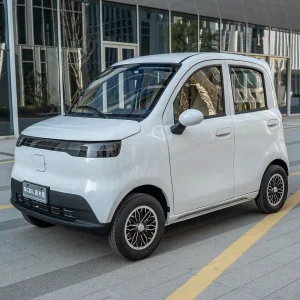
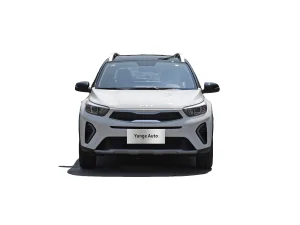
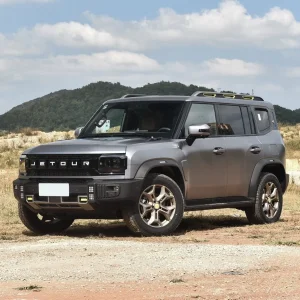
With 30 years of experience in the automotive export industry, Changchun Levers Auto Service Co., Ltd. is a leading wholesaler, distributor, and dealer of cars and micro-mobility vehicles in China. Authorized by the Chinese government, we specialize in exporting high-quality cars, electric vehicles, and personal transit solutions worldwide.
Our state-of-the-art facility features a wide range of certified, road-ready vehicles. We maintain strict standards for our global clientele, ensuring each vehicle is inspected, certified, and ready for immediate deployment.
Importing electric mobility products involves navigating rigorous regulatory frameworks. A reliable manufacturer must design vehicles that meet the legal requirements of target markets.
Scooters must carry the CE mark and conform to EN 12184, which specifies safety and performance testing protocols. This covers brake efficiency, dynamic stability on steep inclines, and electromagnetic compatibility.
Mobility scooters are categorized as Class II medical devices by the FDA. Manufacturers must secure a 510(k) premarket notification clearance, demonstrating that the device is safe and effective before commercial distribution.
All lithium-battery-operated models must carry UN 38.3 test certification. This guarantees safety during air and sea transport, covering altitude simulation, thermal shock, vibration, impact, and overcharge parameters.
Key industrial insights and purchasing guidelines for global buyers, procurement specialists, and distributors.